Different Types of Outdoor Advertising:
Pros and Cons
Choose the right OOH format for your goals, audience, and budget.
Once upon a time, our fathers and grandfathers received their news in large printed newspapers containing multiple sections and categories. Today, a simple notification can deliver highly specific news to our phones within moments.
Advertising is no different. It is no longer limited to a single static billboard. Today, one digital screen can display multiple advertisements, making it far more efficient than owning three separate outdoor advertising spaces.
A digital billboard can also communicate that your brand is modern, innovative, and up to date.
The possibilities are limited mainly by marketing creativity and awareness of the formats available in the market. Of course, the marketing budget also matters—but that is why you are here.
In this guide, you will learn about the main types of OOH media, or out-of-home media, along with their advantages and disadvantages. This will help you choose the most suitable option according to your requirements and budget.
Recommended reading
Did you know that outdoor advertising can influence subconscious brand awareness? If you are interested, read:
What Are the Benefits of Outdoor Advertising?
Billboards
Types of Billboards
Mobile Billboards
Digital Billboards
Static Billboards
Static billboards are the format most people are familiar with: traditional printed advertising structures placed along roads, highways, and busy urban routes. Some can be as large as a six-story building, communicating that the advertised brand is a major player in its industry.
Static Billboard Pros
- High business prestige.
- Strong market trust.
- Consistent marketing exposure.
- Very low maintenance.
Static Billboard Cons
- High initial cost.
- Changing the advertisement requires new production and installation costs, which can be nearly as high as the original setup.
Mobile Billboards
Mobile billboards are transported or displayed on vehicles. They are particularly useful when a brand wants to build awareness across multiple areas while targeting specific traffic patterns and market segments within a controlled budget.
When used properly, mobile billboards can provide better value than large static billboards. However, they do not fully replace the prestige or consistent marketing effectiveness that a permanent billboard can provide.
Mobile Billboard Pros
- Usually less expensive than static billboards because of easier access to vehicles and lower ownership requirements.
- Can move between multiple locations.
- Useful for promoting multiple branch openings on different dates or targeting high-traffic areas on specific days.
- Can deliver consistent exposure if left in a location for a considerable period.
- Can be more attention-grabbing than static billboards when the vehicle design is creative and well executed.
Mobile Billboard Cons
- Generally offers less business prestige than a static billboard.
- Marketing effectiveness may be less consistent if the vehicle does not remain in the same area for long periods.
- Requires vehicle maintenance and suitable parking or operating areas. A branded vehicle cannot simply be left in random locations without considering local regulations and permissions.
Digital Billboards
Digital billboards are among the most advanced outdoor advertising formats. They may require a higher initial investment than traditional billboards, but this cost can be offset by their flexibility and long-term revenue potential.
A single digital screen can display multiple advertisements, allowing several campaigns to share the same advertising space. It can also display animated content and enable creative updates without the printing and installation costs associated with static billboards.
Digital Billboard Pros
- Very high business prestige.
- Can strengthen market trust compared with some static formats.
- Provides consistent exposure in high-traffic locations.
- Highly eye-catching, especially in markets where digital billboards are less common.
- Supports animated advertising content.
- Allows advertisements to be edited or changed digitally without printing and installation.
- Professional outdoor screens are designed to withstand demanding street environments, although they still require proper technical maintenance.
Digital Billboard Cons
- High initial cost. Screen installation usually costs more than a standard static billboard setup, but the long-term return can improve through shared inventory and lower creative-change costs.
Retail Advertising
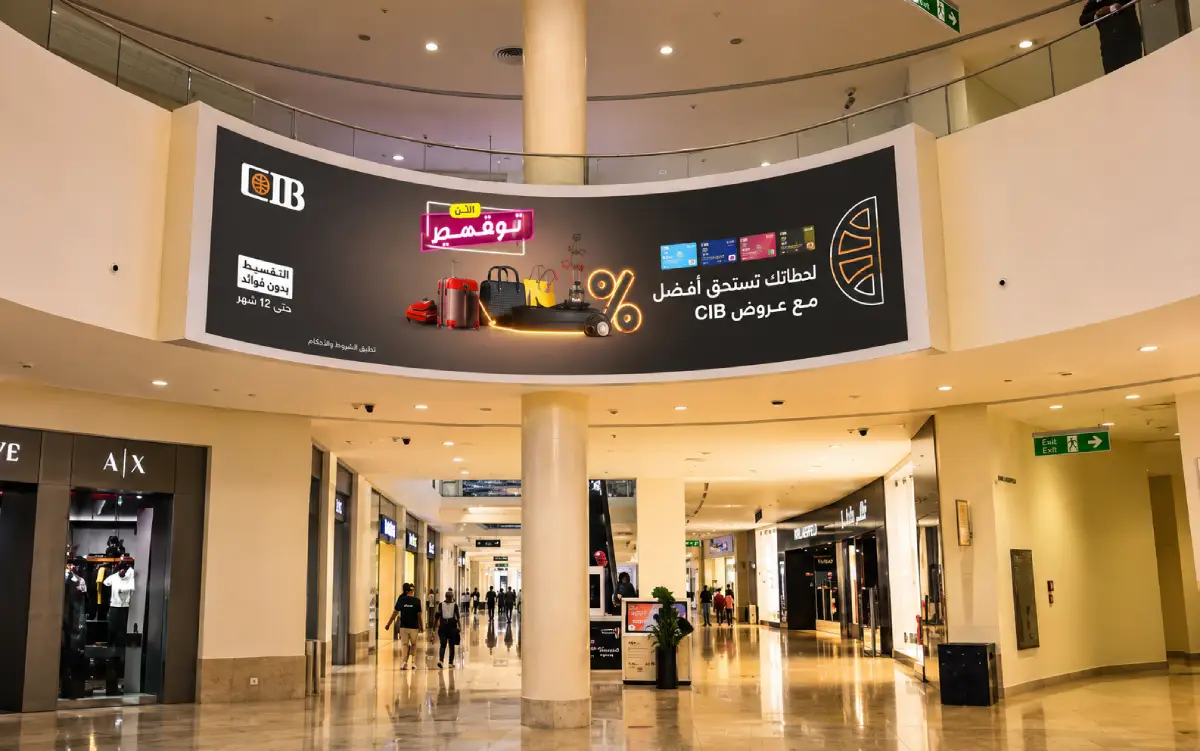
One of the most common forms of OOH media, and one that can deliver strong ROI and marketing cost-effectiveness, is retail advertising.
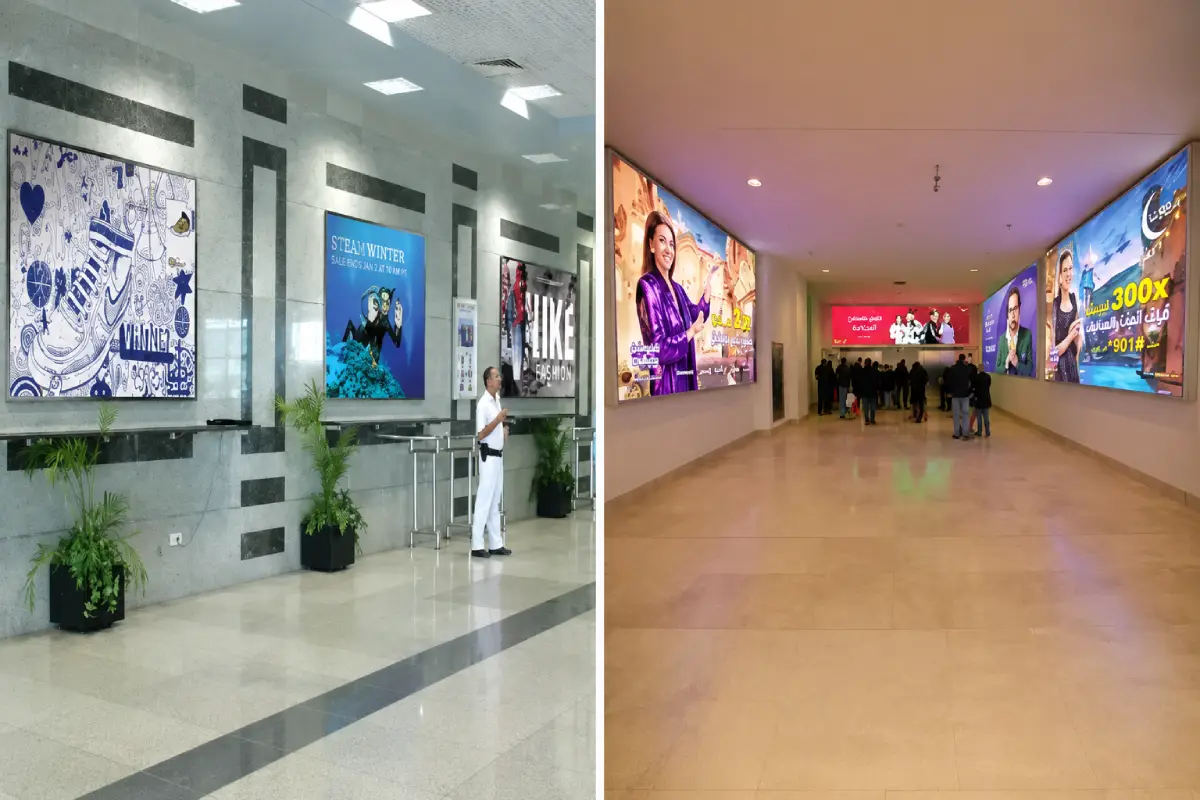
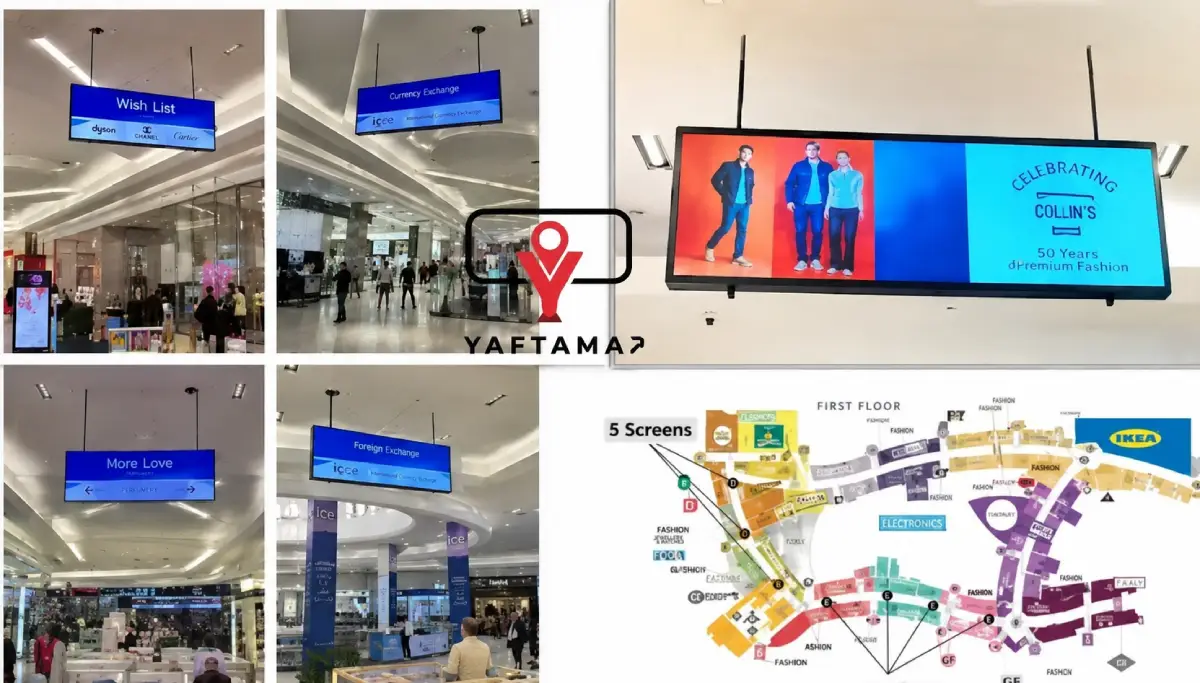
As the name suggests, retail advertising includes advertisements placed inside shopping malls, retail stores, and other commercial environments.
These placements can be highly effective when the advertisement appears in a relevant environment. For example, an advertisement for clothing or perfume may perform well near a fashion-shopping area.
Retail advertising can also attract consumers who are near a competitor’s store or outlet by using an appealing offer, discount, or clear direction to a nearby location. Its main advantage is often strongest when the advertised business has a retail outlet close to the placement.
However, these advertisements may cost more than their physical size suggests. Due to high demand and strong potential ROI, their rental price can sometimes exceed that of a much larger roadside billboard, depending on the shopping mall and exact location.
Retail Advertising Pros
- Very high traffic potential.
- Strong ROI and marketing cost-effectiveness when the placement matches the target audience.
- Can attract consumers who are considering competitors or shopping nearby.
Retail Advertising Cons
- Can be expensive.
- Design options may be limited because the advertisement must be simple, clear, and easy to understand in a crowded environment filled with stores, signs, and competing messages.
Types of Retail Advertising
Retail advertising takes many forms and can be applied at different scales, making it a viable option for businesses of different sizes and budgets. Some of the most effective and prominent types include:
Lift Graphics
Printed vinyl graphics applied to lift doors, allowing for creative and memorable two-part visual designs.
Floor Graphics
Graphics applied to retail floors to create an immersive advertising experience through creative visual designs.
Mall Media
Advertising media that can include floor and roof graphics, window films, banners, and other placements across a shopping mall.
These retail advertising formats generally share similar advantages and disadvantages, while differing mainly in their creative execution and placement.
Vehicle Advertising
Vehicle advertising is similar to mobile billboard advertising because it moves through different locations instead of remaining in one fixed place.
A professionally branded vehicle with attractive graphics can increase visibility and make the brand easier to recognize in crowded urban environments. Even when the vehicle is parked, it can contribute to brand prestige when positioned near a retail outlet or another relevant business location.
This approach generally assumes that the business owns or rents a vehicle. Another affordable and cost-effective option is placing advertising graphics on buses, taxis, trains, or other public transportation operating along specific routes.
This can be especially effective when the vehicle travels through areas relevant to the target audience. In that case, the advertisement acts somewhat like a billboard, but reaches multiple known locations along a consistent route at a lower cost.
Branded company vehicles can also offer a cost-effective solution because the main additional expense may be the design and application of the graphics. A well-known example is the use of branded delivery trucks by companies such as Coca-Cola.
Vehicle advertising can increase brand awareness in a specific area within a relatively short period and with a controlled budget. However, it does not provide the same level of prestige as a large permanent billboard.
Vehicle Advertising Pros
- Can provide a low-cost option with strong ROI when transportation routes are selected carefully.
- Can significantly increase brand awareness in specific areas.
- Usually costs less than renting a premium roadside billboard.
- Can create high prestige when a luxury or professionally branded vehicle is used.
- Can be both static and mobile, depending on whether the vehicle is parked or operating on a route.
Vehicle Advertising Cons
- Can be moderately expensive when a luxury vehicle is owned or rented specifically for branding.
- Usually offers lower prestige than a large permanent billboard when the advertisement is placed on public transportation routes.
Choose the format that fits your campaign
The right OOH format depends on your target audience, campaign objective, location, duration, creative requirements, and budget. A strong media plan may combine static billboards, digital screens, retail media, and vehicle advertising to create broader and more consistent brand exposure.