Digital Out-of-Home Advertising in Egypt 2026 – Your Complete DOOH Guide
If you’ve ever stood on Ring Road or 6th of October Bridge and thought, “My brand should be on THIS wall,” you already understand the power of outdoor advertising. But digital out-of-home (DOOH) takes that power even further: rotating messages, dynamic content and a level of flexibility that classic billboards can’t offer.
Quick answer: Use DOOH when you want to launch campaigns with multiple messages, adapt to time of day or season, and sync your outdoor presence with digital promotions and real-world events.
Digital out-of-home advertising in Egypt has grown rapidly over the last decade – and for a simple reason: it solves one of the biggest problems in outdoor media, which is the inability to change your message quickly.
With classic billboards, once you print and install a vinyl, your creative is locked for the entire campaign. If you launch a new product, change a price, or need to adapt to a seasonal event, you either ignore it or pay to replace the whole board. DOOH removes that lock. It gives you screens where multiple brands can share time slots, where you can rotate up to 10–15 messages in a single day, and where you can update content from your office without ever touching a physical board.
In Egypt, DOOH is now common on major roads, in malls, in airports, and increasingly in transit hubs and high-traffic indoor locations. For national brands, retailers, tourism companies and even local businesses, it’s a powerful tool that sits between traditional billboards and digital advertising – physically visible, but digitally flexible.
With Yafta Map, you can browse live billboard inventory, explore classic billboard advertising in Egypt alongside digital out-of-home advertising in Egypt, compare locations and formats, and build a mix that fits your launch calendar, budget and performance goals. And if you’re a supplier, you can compare outdoor locations as a supplier and list your own sites on the platform.
If you’re unsure where to start, don’t worry – our team is ready to give you free consultations on WhatsApp to help you understand which outdoor and DOOH formats actually make sense for your business.
What Exactly Is DOOH in Egypt?
DOOH (digital out-of-home) covers any outdoor or indoor advertising surface that uses digital screens instead of printed vinyl – from roadside LED billboards to in‑mall and in‑airport networks, and even transit screens in buses and stations.
- Roadside digital billboards: Large LED screens on key highways and city entrances where multiple advertisers share rotating time slots. One screen can show Brand A for 30 seconds, then Brand B, then Brand C, and so on.
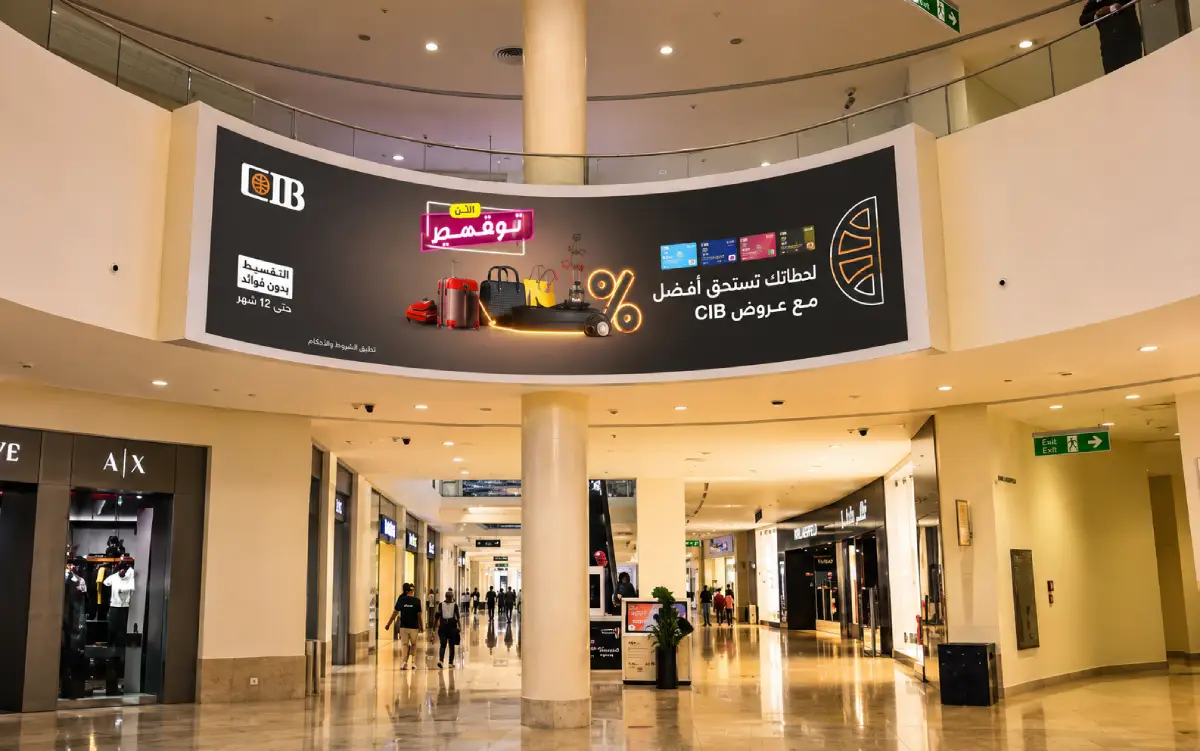
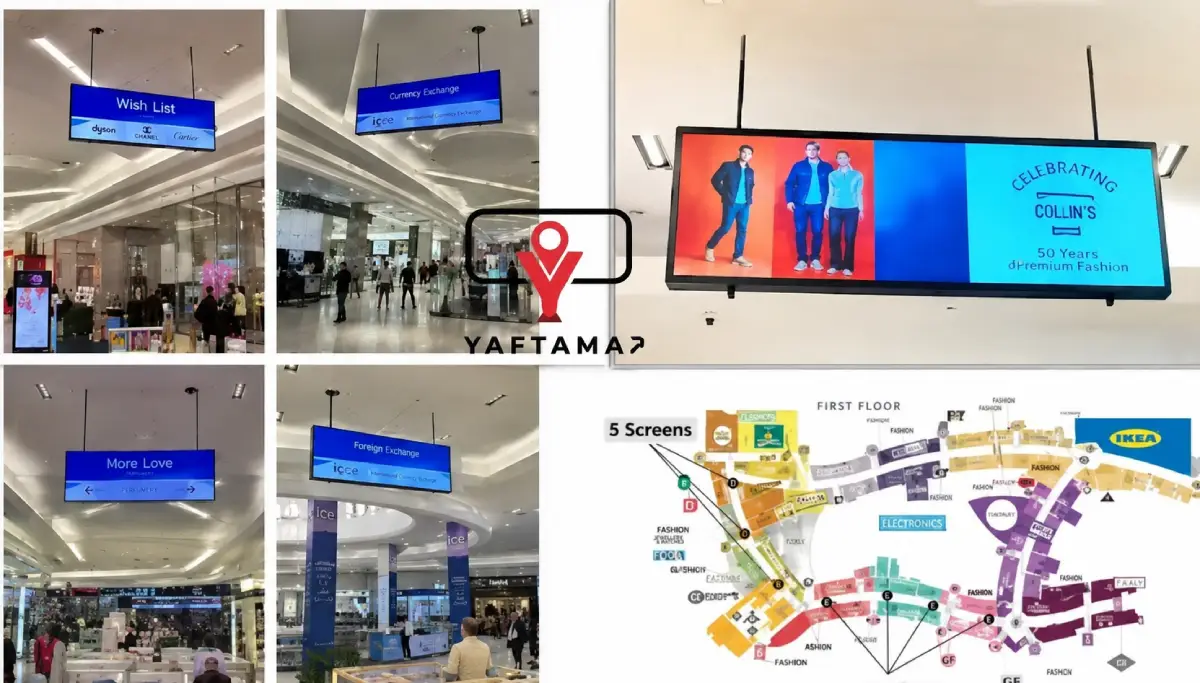
- Mall & retail screens: Digital panels inside malls, supermarkets and retail clusters that reach shoppers right before purchase decisions. These are often connected to store promotions, weekend offers and new product launches, and can be combined with mall and retail advertising on static surfaces.
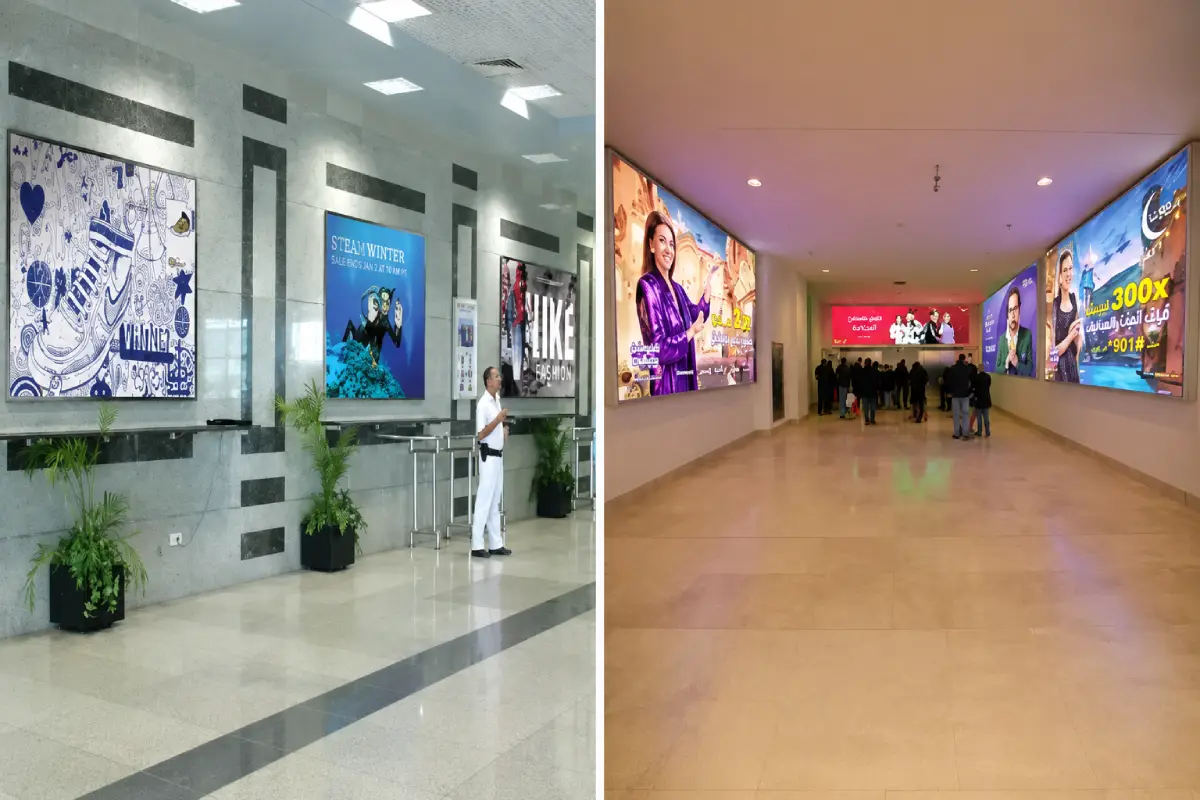
- Airport media: Digital networks in terminals and gates targeting travellers and high‑income passengers. Airport DOOH is ideal for tourism, airlines, luxury brands and high-end services, and is often planned as part of premium airport advertising packages.
- Transit & transportation DOOH: Screens in or around buses, stations and mobility hubs that follow daily commuter flows. They’re especially strong for brands that want to be seen during morning and evening commutes, and can be integrated with transportation ads on buses and trains.
- Experiential & smart activations: Interactive screens, data‑driven triggers and integration with drone or robotic advertising for launch moments. These formats are new in Egypt, but they’re already creating buzz for big brands and events when combined with drone advertising for launch moments and robotic advertising and smart activations.
For a beginner, the most important point is: DOOH is not just a “digital billboard.” It’s a whole ecosystem of screens in different places, each with its own audience behavior and creative possibilities.
DOOH vs Classic Billboards – When to Use Each?
Digital screens and classic billboards often work best together. The right mix depends on whether you need long‑term presence, flexible messaging or both.
| Aspect | Classic Billboards | Digital OOH Screens |
|---|---|---|
| Presence | Always on, 24/7 presence with a single creative. | Rotating spots shared between several brands. |
| Flexibility | Fixed message for the full campaign period. | Change copies, visuals and offers in real time. |
| Best use cases | Long‑term awareness, big statements, road domination. | Tactical promos, day‑parting, multiple product lines. |
| Creative possibilities | Strong single visual and a short core message. | Animations, multiple slides and context‑based messages. |
| Integration | Works as a stable backbone for your OOH plan. | Amplifies launches and supports digital campaigns. |
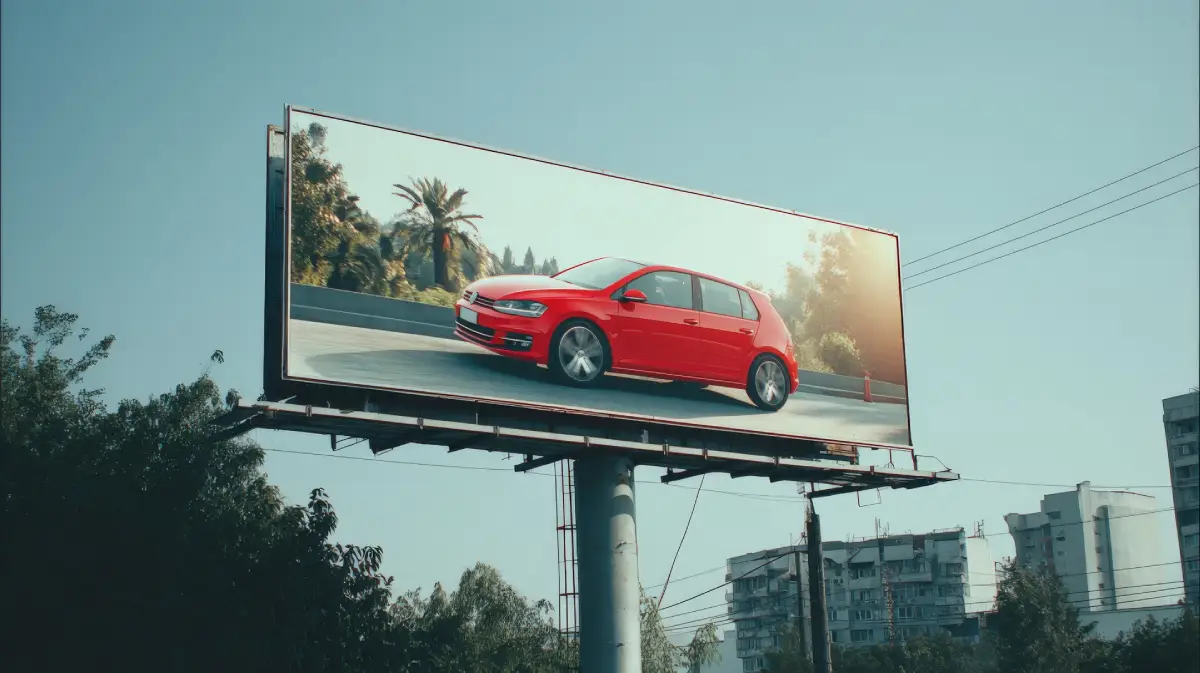
From years in the field, one rule is clear: don’t choose DOOH or billboards. Choose them as parts of the same system. Use classic billboard advertising to build a strong, always-on presence, and DOOH to add flexibility and tactical moves on top.
Where Does DOOH Work Best in Egypt?
DOOH shines most in locations where people naturally slow down, wait or shop – giving your message more time to land and more relevance to their context.
In malls and retail clusters, digital screens reach shoppers just before they make purchase decisions. This is the moment when people are most open to price, discount and new product information. If you’re a retailer, a supermarket, a fashion brand or a local service, mall DOOH can be one of your most effective channels, especially when you combine it with indoor advertising in offices and malls and static mall and retail advertising assets.
In airports, DOOH speaks to travellers and high‑income audiences with time to look around. For tourism, airlines, luxury brands and high-end services, this is a premium environment where people are planning trips, booking hotels or choosing services for their next journey through premium airport advertising packages.
In transit hubs and transportation routes, DOOH connects with commuters on repeat daily routes. Morning and evening commutes are powerful: the same people pass the same screens every day, which builds strong familiarity and recall, especially when combined with transportation ads and moving formats.
Yafta Map helps you connect these touchpoints into one plan – combining roadside DOOH, mall and airport screens, indoor media and transit formats into a single outdoor story that matches real audience movement.
How Different Businesses Can Use DOOH
Here are some quick patterns for how various business types in Egypt can plug DOOH into their outdoor mix.
National brands & FMCG
Use DOOH on top highways and city entrances to launch campaigns, rotate SKUs and sync offers with TV and digital. Layer it with classic billboards for long‑term coverage. For example: billboards for brand presence, DOOH for weekly promos and new product highlights, planned through expert OOH media planning and buying.
Retailers & malls
Focus on in‑mall screens, nearby roadside DOOH and indoor signage to drive footfall, highlight offers and support weekly or seasonal promotions. Use messages that change with weekends, holidays and new arrivals, supported by creative design services for billboards and screens that keep your visuals clear and readable.
Tourism, airlines & high‑end brands
Combine airport DOOH, premium roadside screens and key tourist‑route locations to stay visible from arrival to hotel check‑in and beyond. Use language and visuals that match the traveler’s mindset: escape, luxury, experience – and support them with event management and brand activations during peak seasons.
From Screens to Movement – Transport, Drone & Smart Activations
DOOH doesn’t have to stay fixed in one place. When you combine digital screens with transportation, drone or robotic advertising, your message starts moving with your audience, not just waiting for them to pass.
Branded buses and trains can carry your visuals across entire cities. Transit DOOH is powerful because people see it multiple times during the day – morning, midday, evening – and they often have time to look at screens while waiting or commuting. This is where strong transportation ads deliver consistent, repeated impressions.
Drone campaigns and smart robotic activations can create launch moments that people film and share. These formats are new in Egypt, but they’re already creating buzz for big brands and events. When you combine them with DOOH screens, you get a mix of static presence and moving, experiential moments powered by drone advertising and robotic advertising and smart activations.
Through Yafta Map, you can plug all these elements into one coordinated outdoor plan instead of managing separate suppliers for each format.
Creative, Planning & PR – Making DOOH Work Harder
Great DOOH campaigns are built on three things: strong creative, smart planning and amplification through PR and digital.
With Yafta Map, you can combine creative design services for billboards and screens tailored for big formats, OOH media planning and buying based on real locations and audience flows, and PR and media relations for outdoor campaigns to turn your outdoor presence into stories people actually talk about.

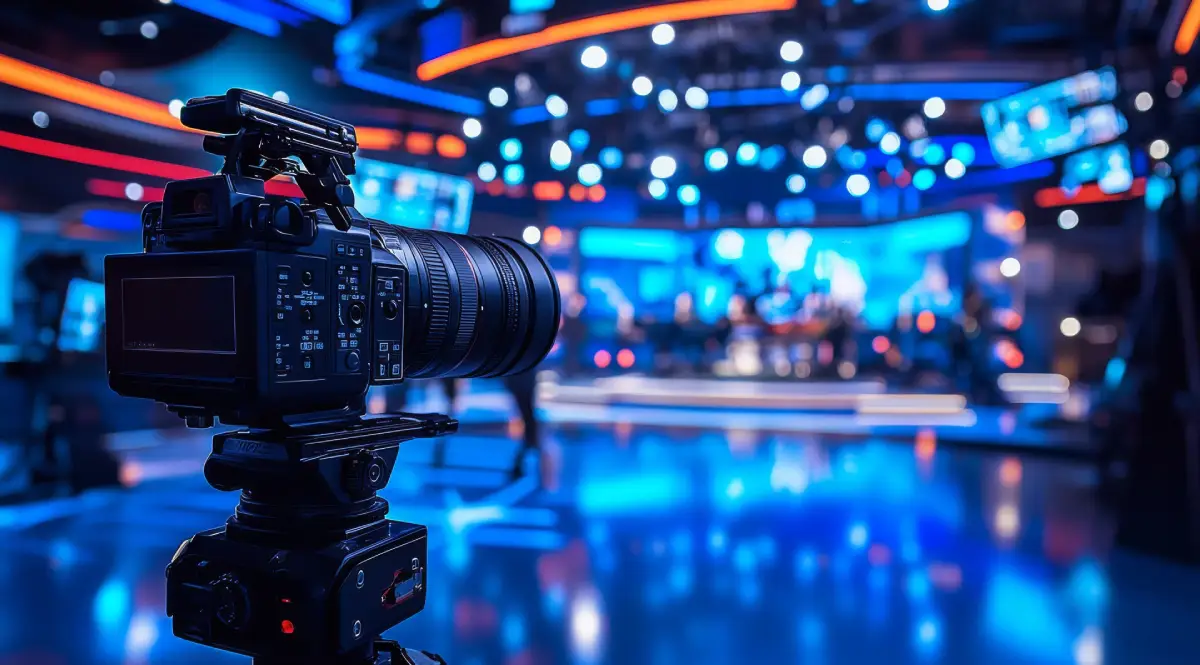
From deep experience with outdoor in Egypt, one mistake is common: brands treat outdoor as a side channel, not a core part of the campaign. DOOH becomes powerful when you design it as part of the same story as your TV, digital and social media – not as an afterthought. That’s exactly what full campaign management for outdoor and DOOH is built to solve.
Common Questions About DOOH in Egypt
Is DOOH more expensive than classic billboards?
It depends on the location and duration. Roadside DOOH screens on prime roads can be more expensive per minute than a static billboard, but you share the screen with other brands, so your actual cost is often lower. For malls and airports, DOOH is usually priced as part of a network, and you can get very good value for the reach you get inside those spaces.
Can I change my DOOH message during the campaign?
Yes. That’s one of the biggest advantages. You can rotate multiple messages in a single day, change offers for weekends, or adapt to events and seasons. This is something you can’t do with a classic billboard without physically replacing the vinyl.
Do I need special creative for DOOH?
Yes. DOOH screens often show short loops or multiple slides, so your creative should be designed for that. Use simple text, strong visuals and clear hierarchy. If you’re not sure how to design for DOOH, our team can guide you or connect you with creative design services that specialize in outdoor and digital screens.
Can DOOH work for local businesses?
Absolutely. Local businesses often benefit more from screens near their location – in malls, on nearby roads, or in transit routes that their customers actually use. You don’t need to dominate the whole city; you need to dominate the area where your customers live, work and shop.
Can Yafta Map help me design and plan DOOH as part of a bigger outdoor strategy?
Yes. Yafta Map offers OOH media planning and buying and full campaign management to help you choose locations, formats and timing – plus PR support to amplify your outdoor presence. And you can always start with a free consultation on WhatsApp to discuss your case.
Plan Your DOOH & Outdoor Campaign in Egypt with Yafta Map
To get the most out of DOOH in Egypt, you need more than just a single screen. You need the right locations, formats and timing brought together under one clear, data‑driven plan.
If you’re unsure where to start, our team is ready to give you free consultations on WhatsApp to help you choose the right outdoor and DOOH formats for your business, budget and goals.